Wednesday, 12 October 2016

BBFC Research

The BBFC (British Board of Film Classification) is the organisation that classifies movies into their selected age ratings (U, PG, 12, 15, 18). It was founded in 1920 as a joint effort throughout the film industry in order to protect viewers from being subjected to film that was not suitable for their age range. They have the legal ability to rate films and be able to censor or full on reject certain works from being shown in the UK. Censoring cuts material deemed inappropriate, either allowing it to fit inside a certain age rating or allowing it to be actually shown to the public.

The age ratings are as follows;
U – Universal; meaning that it is suitable for absolutely any audience.
PG – Parental Guidance; meaning that there could be very mild inappropriate content and young children should be accompanied by an adult whilst viewing.
12 – Only suitable for this age or over; contains some swearing and violence
15 - Only suitable for this age or over; contains more swearing, violence, sex or drugs
18 - Only suitable for this age or over; contains blood, gore, swearing, sex, extreme violence, extreme drug use, etc.

Image result for bbfc

Tuesday, 11 October 2016

Director Research and Case Study - Peter Jackson

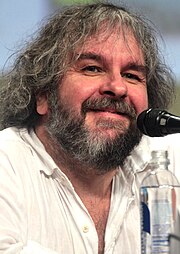
The director that I chose for my Case Study is Peter Jackson, the director, writer and producer of the world renowned franchise Lord of the Rings (2001-2003) and The Hobbit (2012-2014). He was born in New Zealand on 31 October 1961 and is a Film Director, Screen-Writer, Film Producer and Actor. He also directed the 2005 remake of King Kong and he produced District 9, The Adventures of TinTin: The Secret of the Unicorn. He has also dabbled in the areas of comedic horror with Bad Taste (1987) and Braindead (1992). He has been awarded 3 Academy Awards, a Golden Globe, 3 Saturn Awards and 3 BAFTA's. His production company is called Wingnut Films. He also has his own star on the Hollywood Walk of Fame. 
Peter Jackson SDCC 2014.jpg

From a young age Jackson was a massive film fan and drew inspiration from television series like Thunderbirds and Monty Python. He used to make short films with his friends, even attempting to make a stop-go animation remake of his favourite film King Kong. He practically taught himself editing, special effects and make-up through trial and error. He watched the animated part-adaptation of The Lord Of The Rings as a child, obviously sparking the idea for a full cinematic adaptation from an early age.


Image result for lord of the rings animated film
Jackson's most famous cinematic creation was his adaptation of the Lord of the Rings trilogy (written by J.R.R Tolkien). He won the rights to it in 1997 after meeting a producer named Saul Zaentz. Originally the film was to be produced by Miramax, who wanted two films but after being pushed into cramming the whole trilogy of books into a singular movie, Jackson singed a last minute deal with New Line Cinema to create a whole trilogy. Most of the filming was done in the outside of New Zealand, with the set for The Shire still being able to be visited today. Jackson was always given enough time to refine the films to their maximum potential. The third film in the trilogy, Return Of The King, is by far the most successful, winning 11 Oscars, including best picture and director. 
Image result for return of the king

Sunday, 9 October 2016

Conglomerates in the Film Industry


A conglomerate is a combination of multiple different companies that are all owned or ‘fall under’ a singular company. In relation to the Film Industry, a conglomerate is where an extremely large cooperation owns many other small companies that provide them services (like production of a film). A good example of this is The Walt Disney Company, the large singular company whose conglomerates are; Walt Disney Animation Studios, Pixar Animation Studios, Marvel Entertainment and Lucasfilm just to name a few of them. These smaller companies produce, distribute and market films under Disney’s lead and budget, and a large majority of profits feeds back into the company and its affiliated conglomerates, practically keeping them all up and running as one entity.


Thursday, 6 October 2016

Ideologies In Film

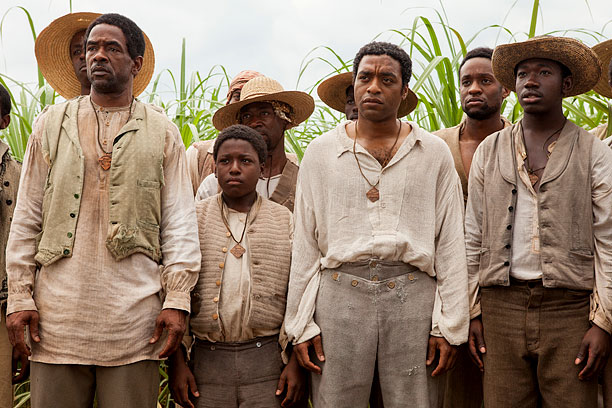
Ideology, by definition is; 'a system of ideas and ideals, especially one which forms the basis of economic or political theory and policy'. So, when applying this into film, it is basically what the film is trying to tell the audience throughout it's run-time and how they will receive this information because of their different social views. Different films will present us with different ideologies as each film is focused on a different person from a different time, culture or society. For example, the ideologies presented in a film about slavery (i.e 12 Years a Slave) would be completely different to that of a film based around the White population of America during this time.


Image result for films about slaves

There are three main categories of Ideologies;
Neutral: A neutral ideological film is where the basis of it is on action and entertainment as oppose to hard hitting topics. The values shown are all part of the entertainment so will be twisted to fit the film itself. 
Implicit: Two main characters inside the narrative will hold completely opposing values (Hero Vs Villain) but this is not focused on inside the story. Instead we are led to follow the hero's beliefs as that is what the audience has been brought up knowing. This means that the more widely accepted beliefs will be held by the protagonist. For example, Star Wars shows the ideologies between Luke and The Emperor (Good VS Evil).
Explicit: A Film made solely to teach or persuade the audience into a way of thinking, morphing their current ideologies with those shown inside the movie, for example The Lion King teaches children about good morals, friendship and acceptance. 

Wednesday, 5 October 2016

Intertextuality in Opening Sequences

A notion introduced by Julia Kriteva suggested that a singular text is shaped by the meanings of other texts that relate to it. She stated that a text is not an isolated entity and is instead an amalgamation of the meanings and products shown through other texts.

Image result for julia kristeva

Media intertextuality is where a certain text (movie/TV show/book) makes links to other Media texts, like a predecessor in the series or an original creation (if the current text is a remake) or, in some cases, a completely separate text (this is often known as an 'Easter Egg'). This is very important when thinking about audience, as intertextuality has to be understood by the audience in order for the reference to actually make sense. 

Image result for star wars easter egg indiana jones

Intertextuality in the form of references is often shown in the comedy genre, especially in animated TV shows aimed at large audiences (like The Simpsons). A lot of the comedy here relies on prior knowledge of each reference, which in some form increases the intellectual requirement for consuming the program. This increases the audience's pleasure whilst consuming the text, due to the way in which it is involving them personally and making them feel included when they understand the references included. The use of intertextuality also subverts the idea of engrossing an audience in the narrative as it pulls from it and shows how our mediated society is all linked.

Image result for media intertextuality

Sunday, 2 October 2016

Awareness Of Audience

Audience in the Media Industry is one of the most important aspects of any text that has been created and distributed to the world. An Audience, by definition, is the group of people at which a certain piece of text is aimed. For example, an animated movie is aimed at a younger demographic whilst a horror movie is aimed at a more adult audience. All movies have to maintain a targeted audience that their product is aimed at. This target audience that has been presented to them then has influence on the production, editing, marketing and final distribution of the product (as different audiences want to see completely different things). Here are some different audience categories;

Image result for audience categories media

There are also different types of audience based on the number of people that they contain;
A Mass Audience is a very wide-spread audience that does not hold any key prejudices or ideals and will consume most if not all main-stream films.
A Niche Audience is one with a comparatively smaller population with interests that are more focused into unique areas.

Media audiences are researched in many different ways. This is mostly done through ratings, sales and figures but there are a few organisations (like BARB and ABC) that monitor audiences throughout their targeted Media outlet. These organisations carry out research in two different types;
Quantitative research - number based, factual and focuses on questions that give very exact answers.
Qualitative research - individual preferences, open questions and aims to show opinions and thoughts.